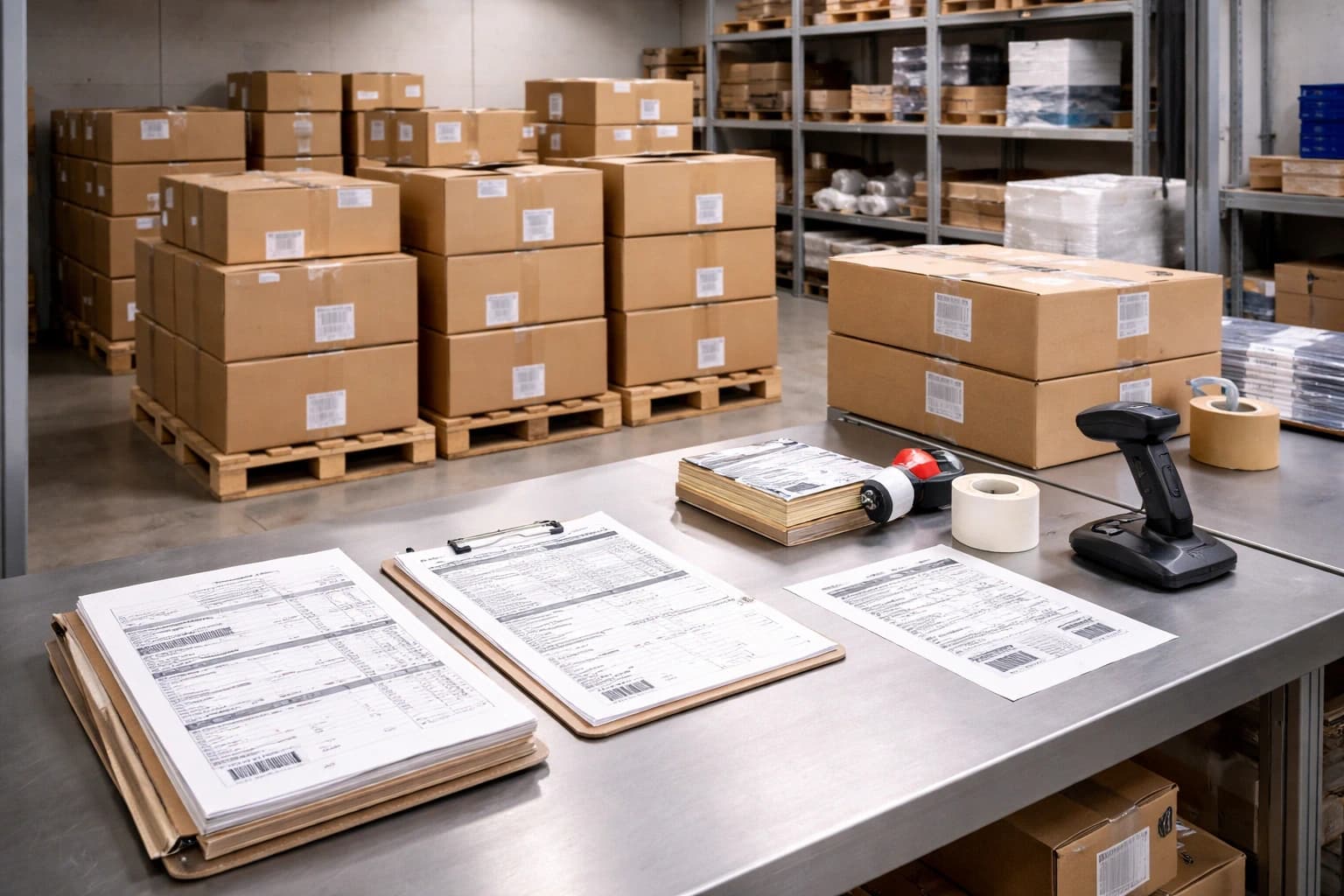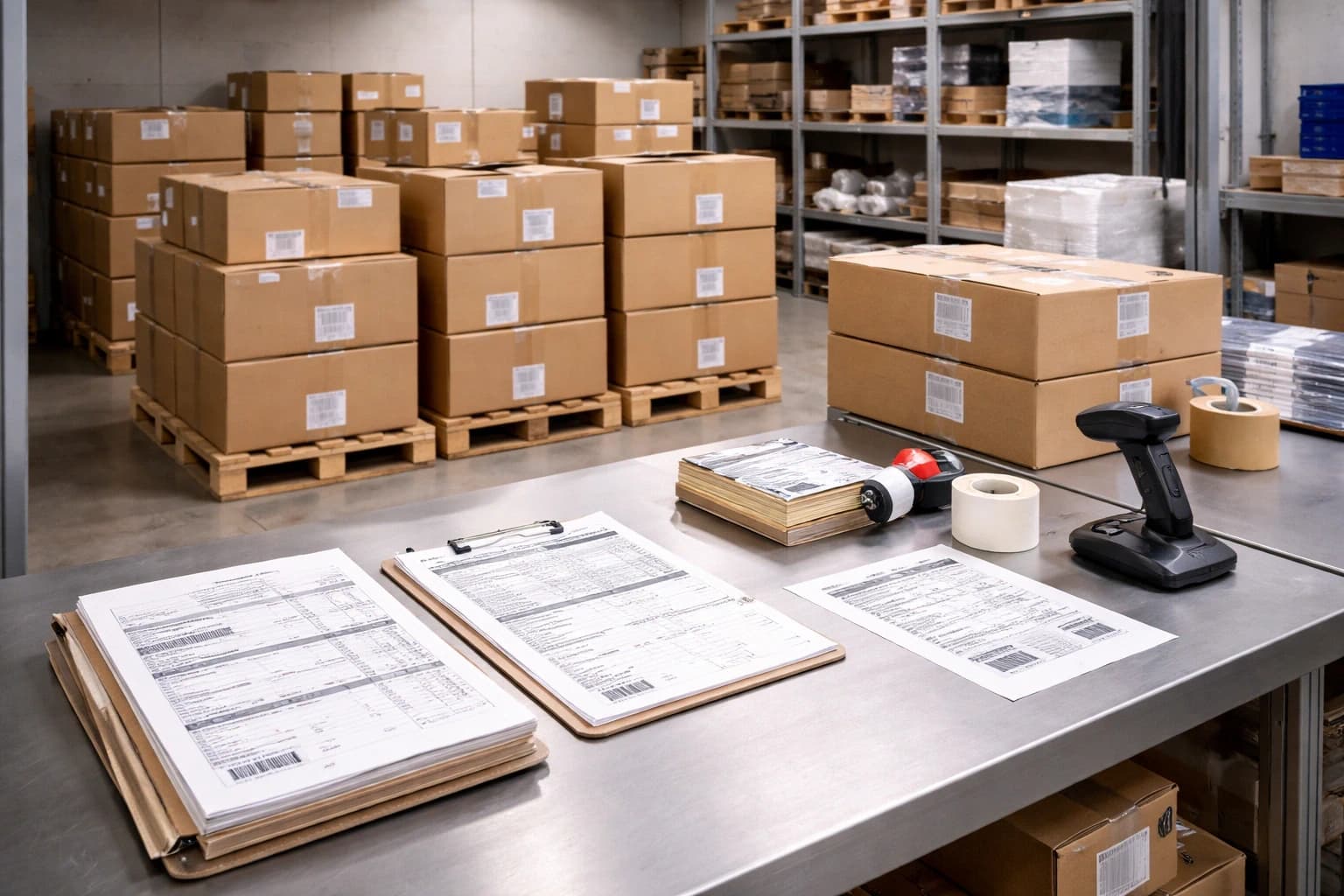
GST compliance in a dealer distribution network is not primarily an accounting problem. It is an order management problem. The reconciliation failures that create GST liability for Indian manufacturers — mismatched invoice values, missing HSN codes, e-way bill gaps, GSTR-2A mismatches with dealer purchase records — almost always originate upstream of the accounting system. They originate in the order entry process, where structure is absent and the data that compliance requires is either not captured or not captured correctly.
A manufacturer managing hundreds of active dealer accounts across multiple states cannot reconcile GST accurately at scale if dealer orders are arriving as WhatsApp messages, phone confirmations and informal purchase requests that are manually transcribed into invoices. The invoice may be correct. The HSN code may be applied. The GSTIN may be recorded. But if the record connecting the original order to the invoice is incomplete or absent, the audit trail that GST compliance requires does not exist in any usable form.
This piece covers how structured dealer order workflows address the compliance data problem at the point where it actually originates — order capture — and what that structure produces across the invoice lifecycle, e-way bill generation and reconciliation process.
Where GST Reconciliation Problems Actually Start
GSTR-1 and GSTR-3B reconciliation failures in dealer distribution networks are rarely caused by incorrect tax rates or misconfigured accounting systems. They are caused by data that is incomplete, inconsistent or untraceable at the order level. By the time the compliance team identifies a mismatch, the order that generated the invoice may be weeks old, processed by a different person across a different channel and reconstructible only from the invoice itself.
The most common sources of GST reconciliation problems in dealer networks are consistent across industries and geographies.
HSN code errors at invoice generation are the most frequent. When orders are processed manually, the person generating the invoice selects or types the HSN code. Across a product catalog of several hundred SKUs, manual HSN code selection produces errors at a rate that is operationally predictable. A single incorrect HSN code on a high-value transaction can create a reconciliation discrepancy that the compliance team has to trace back through multiple records to identify and correct.
GSTIN mismatches between the order record and the invoice are the second major source of problems. A dealer who has multiple GSTIN registrations across states — common in building materials, FMCG and industrial goods distribution — may place an order without specifying which GSTIN applies to the transaction. The invoice is generated against the default GSTIN on file. The dealer's GSTR-2A does not reflect the purchase under the correct registration. The mismatch requires manual resolution at the end of the filing period.
E-way bill gaps are the third. For inter-state transactions above the applicable threshold, an e-way bill is required before goods move. When order processing is manual and invoice generation is a separate step, the e-way bill is often generated after the invoice rather than as part of a connected workflow. Gaps appear when invoices are generated for qualifying transactions without a corresponding e-way bill, or when e-way bill details do not match the final invoice values after a partial delivery or quantity amendment.
HSN Code Enforcement at Order Entry
The correct point to enforce HSN code accuracy is the order entry step, not the invoice generation step. When a dealer places an order through a structured portal or mobile app, the SKU they select already carries an HSN code assigned by the manufacturer at the catalog level. The invoice generated from that order inherits the correct HSN code without any manual selection or entry step.
This is structurally different from a workflow where orders arrive in unstructured form and invoices are generated separately. In the unstructured workflow, HSN codes are applied at invoice generation by whoever is processing the transaction. In the structured workflow, HSN codes are applied once at the catalog configuration stage and enforced automatically on every order that references that SKU from that point forward.
For manufacturers with product catalogs that span multiple GST rate categories, catalog-level HSN enforcement also eliminates the class of errors that occurs when a product changes GST rate and the manual entry process does not update consistently across all ongoing transactions. A rate change applied at the catalog level propagates to all subsequent orders. A rate change communicated to an operations team that applies it manually to invoice generation applies inconsistently until the team is retrained or the error is identified.
The same logic applies to GST rate categorisation across state supply and inter-state supply. CGST and SGST apply to intra-state transactions. IGST applies to inter-state. The distinction depends on the supply origin and the dealer's registration state. A structured order management system that captures the dealer's GSTIN and billing address at the point of order can apply the correct tax split automatically. A manual workflow applies it at the discretion of the person generating the invoice.
GSTIN Capture and Validation in the Order Workflow
Every B2B GST transaction requires the buyer's GSTIN to be recorded correctly on the invoice. For dealer accounts that operate across multiple states or under multiple registrations, the GSTIN applicable to a specific transaction depends on the delivery address and the nature of the supply. An order placed for stock destined for a dealer's branch in a different state requires the GSTIN registered in that state.
In an unstructured ordering environment, GSTIN management is handled by whoever processes the order. The dealer may specify a GSTIN in their message or may not. The operations team applies the registered GSTIN from the account record, which may not match the correct registration for the delivery address. The error surfaces at reconciliation when the dealer's accountant identifies a purchase in GSTR-2A under a registration that does not correspond to the branch that received the goods.
A structured order management system addresses this at account configuration. Each dealer account stores the dealer's registered GSTINs against their associated billing and delivery addresses. When a dealer places an order, the GSTIN applicable to the delivery address is selected automatically or presented for confirmation before the order is submitted. The invoice carries the correct GSTIN. The dealer's GSTR-2A reflects the purchase under the correct registration. The reconciliation step that would otherwise require manual investigation does not arise.
GSTIN validation at account setup — verifying that the GSTIN format is valid and corresponds to an active registration — is a further layer that structured systems support. An invalid GSTIN entered at account registration is identified before it generates an invoice. In a manual workflow, an invalid GSTIN may generate several invoices before a reconciliation mismatch surfaces the error.
Invoice-Level Audit Trail Across the Order Lifecycle
GST compliance at the invoice level is not only about correct data on the face of the invoice. It is about the ability to reconstruct, for any invoice, the complete chain of events that produced it: the original order, any amendments, the dispatch details, the delivery confirmation and any credit notes or adjustments that affected the final taxable value.
This audit trail is required for GST dispute resolution when a dealer's GSTR-2A does not match the manufacturer's GSTR-1. It is required for departmental scrutiny when the tax authority queries a specific period's returns. It is required internally when the finance team needs to reconcile the accounts receivable ledger against the GST liability report.
In a fragmented order management environment, this audit trail is assembled retrospectively. The invoice exists in the accounting system. The original order may exist as a WhatsApp message, a field agent note or a verbal instruction. The connection between the two is held in institutional memory or not held at all. When a dispute arises, reconstruction is slow, incomplete and unreliable.
Structured order management creates this audit trail as a natural output of the workflow. Every order that enters the system carries a timestamp, a channel of origin, the dealer account record and the product and quantity details at the time of placement. Every amendment is recorded against the original order. The invoice generated from the order carries the order reference. The dispatch event is linked to the invoice. The delivery confirmation closes the loop.
The result is that for any invoice in the system, the complete lifecycle from original order to delivery confirmation is traceable in a single record. GST dispute resolution that would otherwise take days of manual reconstruction takes minutes of record retrieval.
E-Way Bill Generation Within the Order Workflow
E-way bill requirements apply to inter-state movement of goods valued above fifty thousand rupees and to intra-state movement where the applicable state has notified a threshold. For manufacturers with active inter-state dealer networks, a significant proportion of invoices require e-way bills. In high-volume networks, managing e-way bill generation as a separate manual step outside the order and invoice workflow introduces the gaps that create compliance exposure.
The gap most commonly encountered in manual workflows is the invoice without an e-way bill for a qualifying transaction. This occurs when the person generating the invoice does not recognise that the transaction qualifies, when the e-way bill is generated after goods have already moved or when an invoice value is amended after dispatch without a corresponding e-way bill amendment.
A structured order management system that integrates with the GST e-way bill API generates e-way bills as part of the invoice confirmation step for qualifying transactions. The system checks the transaction value, the supply origin, the delivery address and the dealer's registration state to determine whether an e-way bill is required. Where it is, the e-way bill is generated before goods move and the e-way bill number is recorded against the invoice and dispatch record.
When a partial delivery occurs and the invoiced value changes, the e-way bill amendment is triggered within the same workflow rather than as a separate compliance task. The record connecting the original order, the invoice and the e-way bill remains intact through the amendment.
Accounting System Synchronisation for GST Reporting
GST returns are filed from data that ultimately resides in the accounting system. The accuracy of GSTR-1, GSTR-3B and the annual return depends on the accuracy of the invoice records that feed into the accounting ledger. When order management and accounting operate as disconnected systems, synchronisation between them is a manual process that introduces errors and creates the version mismatches that reconciliation is designed to identify.
A structured order management platform that synchronises confirmed invoices directly to the accounting system — whether Tally, Zoho Books, Busy or another accounting platform active in Indian manufacturing and distribution — eliminates the manual transfer step. An invoice confirmed in the order system appears in the accounting ledger with the correct GST values, HSN codes and GSTIN without re-entry. The GSTR-1 data available in the accounting system matches the order management system's invoice records because they are derived from the same source.
The synchronisation also creates a consistent basis for GSTR-2A reconciliation. When a dealer's purchase record in GSTR-2A does not match the manufacturer's outward supply record in GSTR-1, the discrepancy can be investigated from the order management system's audit trail rather than from the accounting ledger alone. The order record, the invoice record and the accounting entry are connected. The source of the discrepancy — whether a GSTIN mismatch, an HSN code error or an invoice value difference — is identifiable without manual cross-referencing across separate systems.
Credit Notes and Return Order Handling
GST credit notes arise when an invoice value is reduced after issue — due to a return, a short delivery, a pricing correction or a scheme adjustment. Credit notes under GST must be issued within specific time limits and must reference the original invoice. They affect the outward supply figures reported in GSTR-1 and must be reflected correctly in the accounting ledger.
In a fragmented order management environment, credit note generation is often handled informally. A dealer reports a short delivery or a return. The operations team manually generates a credit note in the accounting system. The connection between the credit note and the original order and invoice is maintained, if at all, through a manual reference entry. When the compliance team reconciles the period, credit notes are a source of unexplained differences between the order management records and the accounting ledger.
Structured order management connects credit note generation to the return or adjustment event that triggers it. A short delivery confirmed at the delivery stage generates a credit note request linked to the original invoice. A return approved by the operations team triggers a credit note through the same workflow that generated the original invoice. The credit note carries the original invoice reference, the correct GST values and the reason for the adjustment. The accounting system receives the credit note automatically. The GSTR-1 amendment reflects the adjustment in the correct filing period.
What Structured Dealer Order Management Produces for GST Compliance
The operational outcome of structured dealer order management for GST compliance is not a reduction in the number of compliance tasks. It is a reduction in the difficulty and risk of those tasks. The compliance team still files GSTR-1 and GSTR-3B. They still reconcile GSTR-2A. They still manage e-way bills for inter-state transactions. What changes is the quality of the data available to them when they do.
HSN codes are correct because they were enforced at catalog level rather than selected manually at invoice generation. GSTINs are correct because they were captured and validated at account setup rather than entered by the person processing the transaction. E-way bills exist for every qualifying transaction because they were generated as part of the invoice confirmation step rather than as a separate manual task. Credit notes are connected to the invoices they adjust because they were generated within the same workflow rather than created independently in the accounting system.
For manufacturers managing dealer networks of any significant size, the cumulative effect of these structural improvements is measurable in the time the compliance team spends on exception handling at each filing period and in the reduction of GST notices arising from return discrepancies. The data that compliance requires exists in the order management system as a natural output of structured ordering — not as something that must be assembled manually from incomplete records after the fact.
ZunderFlow provides structured dealer order management infrastructure for Indian manufacturers and distributors. HSN code enforcement at the catalog level, GSTIN capture and validation, accounting system synchronisation and invoice-level audit trails across every dealer order are built into the same platform that manages dealer ordering, delivery tracking and inventory sync. Deployments go live in days, not months.