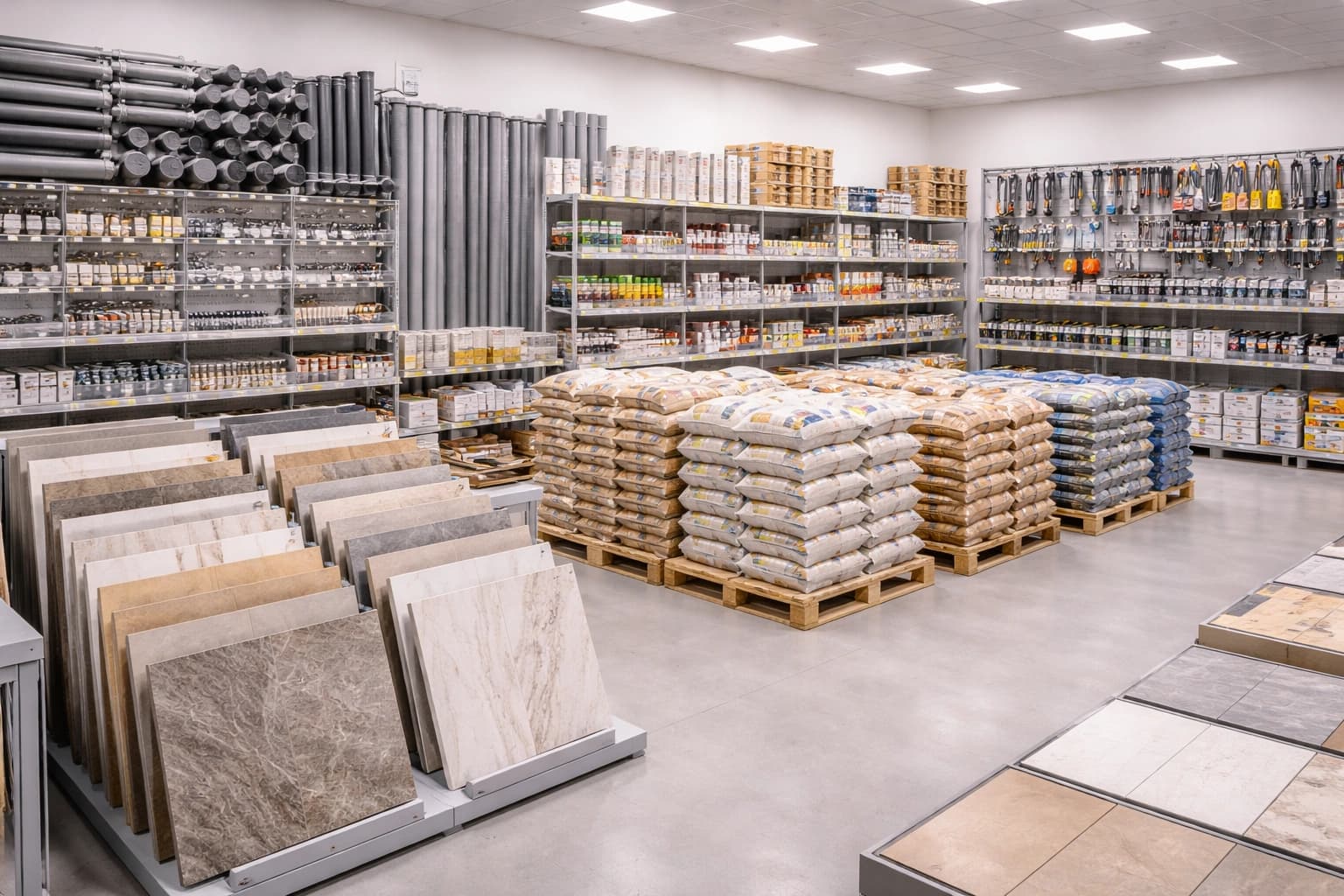
Building materials manufacturers invest significantly in dealer display programmes. Branded display bays, product sample boards, point-of-sale material and structured planograms are designed to influence purchasing decisions at the dealer outlet level - where a contractor, builder or retail buyer makes a product choice in front of physical product.
The gap in almost every building materials distribution network is compliance visibility. A manufacturer can design a display standard, brief their dealer network and ship the display materials. What they cannot easily do is verify, at any meaningful scale, whether the display standards are being maintained at the outlet level after the initial setup. A dedicated field merchandising team with the coverage to audit hundreds of dealer outlets regularly is expensive enough that most manufacturers do not have one. The display programme runs. Compliance is assumed. The actual state of dealer outlets remains largely invisible.
The operational answer to this gap is not a new function or additional headcount. It is the infrastructure that many building materials distributors are already operating - the rider or delivery agent app used for last-mile delivery. This piece covers how that existing infrastructure can be extended to capture outlet display data during standard delivery drop-offs and what that creates in practice.
Why Building Materials Outlets Are Difficult to Audit at Scale
Building materials distribution in India operates through a large and geographically dispersed dealer network. A mid-sized manufacturer may have several hundred active dealer outlets across multiple states, each carrying a mix of the manufacturer's products alongside competitor lines and substitutes.
The economics of dedicated field merchandising at this scale are prohibitive for most manufacturers. A field merchandiser who can realistically cover ten to fifteen outlets per day, across a territory where outlets may be spread across a wide area, cannot provide the coverage frequency that genuine compliance monitoring requires. Most manufacturers who attempt dedicated merchandising programmes find that the coverage rate - the percentage of active outlets visited per month - is significantly lower than the programme design assumed.
The result is that display compliance data, where it exists at all, is incomplete, infrequent and unrepresentative. A manufacturer who receives compliance reports from fifteen percent of their active outlets per month cannot make distribution or commercial decisions from that data with confidence. The other eighty-five percent of the network is invisible.
Riders and delivery agents are already visiting dealer outlets regularly. In a distribution network with active order volumes, the same outlet that a dedicated merchandiser might visit once a month may receive a delivery two or three times per week. That visit frequency exists in the existing operational infrastructure. It is not being used for anything beyond delivery confirmation.
What the Rider App Already Captures
A structured rider app used for last-mile delivery already captures a set of data at each outlet visit: delivery confirmation, time of delivery, proof of receipt and any discrepancies noted at handover. The rider is already at the outlet, already interacting with the dealer's receiving staff and already recording an event against that outlet in the system.
The outlet audit layer adds a structured data capture step to that existing visit - a step that takes the rider thirty to sixty seconds and requires no specialist knowledge. The delivery is made. Before the rider marks the delivery as complete, the app presents a short outlet audit checklist specific to that outlet type and the manufacturer's current display standards.
The checklist is not an open-ended survey. It is a structured set of binary or categorical observations: is the branded display bay present and stocked, is point-of-sale material visible, are the manufacturer's products positioned in the agreed location, is competitor material placed over or alongside the branded display. The rider observes and records. The data enters the system against the outlet record at the time of the delivery visit.
Photo capture can be added to specific checklist items where visual evidence is required. A rider who notes that the display bay is unstocked can attach a photo. The photo is uploaded automatically when connectivity allows and stored against the outlet visit record. The manufacturer has visual evidence of the compliance state at that outlet on that date without having sent a dedicated field team member.
Designing the Outlet Audit Checklist for Rider Use
The design of the outlet audit checklist is the part of this infrastructure that most frequently determines whether the programme produces useful data or becomes an operational burden that riders circumvent.
Keep it short and observable
Riders are at an outlet to complete a delivery, not to conduct a merchandising audit. A checklist that takes more than sixty seconds to complete will either be rushed through inaccurately or skipped entirely. The checklist should contain five to eight items maximum, each of which can be observed and recorded in a few seconds without requiring the rider to move product, speak to outlet staff or access areas of the outlet beyond the receiving point.
Items that require specialist knowledge - correct planogram positioning to within centimetres, accurate assessment of product freshness in a display - are not appropriate for rider capture. Items that are observable by any person standing at the outlet entrance - branded display present, POS material visible, shelf space allocated as agreed - are appropriate.
Configure checklists by outlet type
A large dealer outlet with a dedicated showroom floor has different display standards than a small counter outlet in a trade market. The rider app should present the checklist that corresponds to the outlet type on record for that delivery address, not a generic list that is equally irrelevant to both. Outlet type configuration also allows the manufacturer to introduce category-specific audit items for outlets that carry specific product lines.
Link checklist triggers to active display programmes
When the manufacturer runs a time-limited display programme - a new product launch display, a seasonal campaign or a scheme-linked promotional setup - the rider app checklist for relevant outlets should automatically include the programme-specific audit items for the duration of the programme. The manufacturer gets compliance data on the specific programme without designing a separate audit exercise. When the programme ends, the programme-specific items are removed from the checklist without manual reconfiguration at the rider level.
What the Data Layer Produces
An outlet audit layer built on rider delivery visits produces compliance data at a coverage frequency and network breadth that a dedicated merchandising programme cannot match at comparable cost. A distribution network with active delivery operations may generate outlet audit data from every active dealer several times per month as a natural output of the delivery schedule.
The data this produces is specific. Which outlets are maintaining display standards and which are not. Which outlets have had POS material placed but are not displaying it. Which outlets have competitor material encroaching on the branded display bay. How compliance rates vary by region, by outlet size or by the territory managed by a specific sales team.
This is data that the manufacturer's sales and trade marketing teams can act on. An outlet that consistently shows non-compliant display states can be flagged for a priority visit by the regional sales manager. A region where compliance rates are consistently low can be reviewed for whether the display materials were delivered and correctly installed in the first place. A programme launch where the audit data shows that sixty percent of target outlets have not set up the display two weeks after the programme opened is a programme management signal, not a mystery that surfaces at quarter-end.
The data also exists in the same system as the order and delivery records for each outlet. A manufacturer who wants to understand whether display compliance correlates with order frequency or average order value at the dealer level can answer that question from the same infrastructure, without extracting data into a separate analysis tool.
Rider Adoption and Operational Integration
The outlet audit layer only produces reliable data if riders complete the checklist accurately and consistently. Adoption depends on two things: the checklist being genuinely fast to complete and the audit step being integrated into the delivery completion workflow rather than presented as a separate optional task.
Integrate audit completion into delivery confirmation. The rider marks a delivery as complete through the app. The audit checklist appears as part of that completion flow, not as a separate button or menu item. Completion of the checklist is required before the delivery status updates to confirmed. The audit is not an add-on to the rider's workflow - it is a step within it.
Keep the interface identical to the delivery flow. Riders should not encounter a visually different interface when the audit checklist appears. The checklist items should use the same tap-to-confirm interaction model as the rest of the delivery app. An interface that feels unfamiliar or requires a different mode of interaction introduces hesitation and increases the risk of inaccurate or skipped responses.
Do not ask riders to make judgements they are not equipped to make. A rider who is asked to assess whether a display meets a planogram standard they have never been shown will either skip the item or record an answer that reflects their best guess. The checklist items must be observable facts, not assessments that require training or context the rider does not have.
Use offline capability for connectivity-constrained routes. Building materials dealer outlets are often in areas with variable mobile connectivity - trade markets, peripheral urban zones and rural distribution points. The rider app must support offline checklist completion, storing the audit data locally and syncing when connectivity is restored. A checklist that cannot be completed without an active connection will produce gaps in the data that correspond exactly to the outlets where field visibility is already lowest.
Commercial Uses of Outlet Audit Data in Building Materials Distribution
Display compliance data collected through rider visits is operationally useful beyond trade marketing. Sales and commercial teams in building materials distribution can use it in several ways that are directly connected to revenue and relationship management.
Scheme compliance verification. Many building materials manufacturers run dealer schemes that include a display compliance component - a dealer who maintains the branded display bay in agreed condition qualifies for a higher scheme tier or a specific scheme benefit. Without an audit layer, these compliance conditions are either unenforced or verified through infrequent field visits that cover a fraction of the network. Rider-captured audit data provides an objective, timestamped record of display state that scheme compliance decisions can be based on without disputes.
New product launch monitoring. A product launch that includes a dealer display component requires visibility into whether the display is actually being set up at the outlet level. Rider audit data from the two to four weeks following a launch provides the manufacturer with a real-time picture of setup rates across the network - enabling intervention where setup is not happening before the launch window closes.
Competitor activity intelligence. A checklist item that records whether competitor display material is present at an outlet generates competitive intelligence as a byproduct of the compliance audit. A manufacturer who can see, across their dealer network, which competitors are gaining display space and in which regions has a more current picture of competitive activity than quarterly sales team reports typically provide.
Summary
Building materials manufacturers who run dealer display programmes without a scalable audit layer are operating on assumptions about compliance that the data would not always support. Dedicated field merchandising at the coverage frequency required to govern a large dealer network is not economically viable for most manufacturers. The outlet visits are already happening through delivery operations. The infrastructure to capture data at those visits already exists in the rider app.
Extending the rider app with a structured outlet audit checklist converts existing delivery visits into a secondary compliance data source without adding headcount, without separate field visits and without asking riders to do anything beyond a thirty-second observation at the point of delivery. The data produced is consistent, timestamped and linked to the outlet record in the same system as order and delivery history.
For manufacturers who want to run display programmes that they can actually govern - not just launch - the rider app is the audit layer that makes that possible at distribution network scale.