Van sales and dealer app ordering are often treated as competing approaches to B2B order capture. They are not. They serve different distribution contexts, address different operational constraints and are most effective when understood as complementary channels rather than alternatives to each other.
The practical question for manufacturers is not which model to choose. It is which model fits which part of the network, where they overlap and how to operate both without creating data fragmentation that undermines operational visibility.
This piece maps both models clearly, identifies where each performs well, addresses the overlap scenarios that create the most operational confusion and describes what infrastructure allows manufacturers to run both channels from a single order backbone.
What Van Sales Actually Is
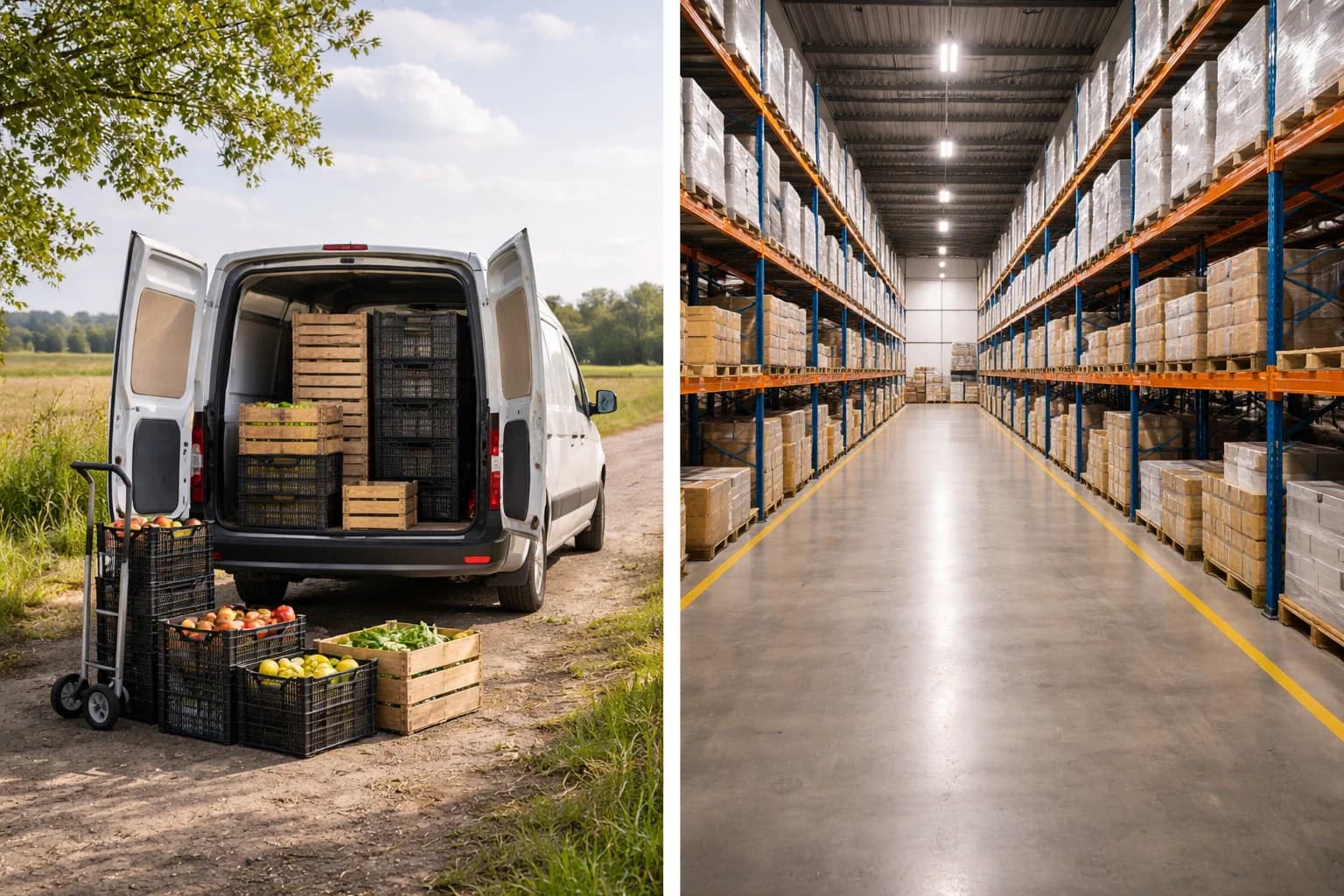
Van sales is a distribution model in which a sales representative travels a defined route with stock loaded on the vehicle. Orders are placed, fulfilled and sometimes invoiced at the point of visit. The transaction is immediate. The dealer or retailer does not need to place an order in advance and wait for delivery. Stock changes hands during the visit.
This model is common in FMCG, beverage distribution, food and perishables and any category where replenishment frequency is high, order values are relatively small and the cost of a separate delivery trip per order is disproportionate. It is also common in markets where dealer ordering infrastructure is limited or where the manufacturer's go-to-market depends on direct field presence at the point of sale.
Van sales automation refers to the software layer that governs what the van sales representative does during the route: recording visits, capturing orders, checking credit limits, applying the correct pricing tier, generating invoices and syncing transaction data back to the manufacturer's operations system. Without this layer, van sales activity produces paper records, delayed data entry and limited visibility into what was sold, to whom and at what price.
What a Dealer Ordering App Actually Is
A dealer ordering app is a structured channel through which dealers place orders independently, without a sales representative present. The dealer logs into a branded mobile app or web portal, sees their applicable product catalog and pricing, places an order and receives confirmation. The order enters the manufacturer's fulfillment workflow without requiring field staff involvement.
This model fits distribution contexts where dealers are placing orders on their own schedule, where order volumes per dealer are significant enough to justify a structured workflow and where the manufacturer wants to reduce dependence on field sales staff as the primary order capture mechanism. It is well suited to dealers who order regularly, who have an established account relationship with the manufacturer and who benefit from visibility into their order history, account balance and delivery status.
A dealer ordering app is not a replacement for field sales. It is a self-service channel that handles the transactional layer of the dealer relationship, freeing field sales teams to focus on relationship management, market development and exception handling rather than order taking.
Where Each Model Fits
The distinction between van sales and dealer app ordering is not primarily about technology. It is about the nature of the distribution relationship and the operational context in which orders are placed.
Van sales fits when:
Stock is carried on the vehicle and fulfilled immediately at the point of visit. Order frequency is high and individual order values are relatively low. The customer base includes small retailers or outlets that do not have a formal ordering process. Market coverage depends on physical route presence. Delivery and order capture happen in a single visit. The product category has short shelf life or high replenishment frequency that makes advance ordering impractical.
Dealer app ordering fits when:
Dealers place orders in advance and receive scheduled deliveries. Order values are significant enough to warrant a structured placement and confirmation workflow. Dealers have an established account with defined pricing, credit limits and order history. The manufacturer wants to reduce the operational load of field-staff order taking. Dealers benefit from self-service visibility into their account, order status and product availability. Order capture needs to happen outside business hours or outside of field visit windows.
The overlap zone:
Many distribution networks contain accounts that fit both profiles depending on the visit context. A mid-size dealer may receive a regular van sales visit for fast-moving categories and also place structured advance orders for slower-moving or higher-value lines through a dealer app. A field sales representative may visit a dealer to review the account and capture an order on the dealer's behalf through the same app interface. The channel and the workflow can serve the same account in different ways at different times.
The Data Fragmentation Problem
When van sales automation and dealer ordering operate on separate infrastructure, order data exists in two disconnected systems. Van sales transactions are recorded in one platform. Dealer app orders are recorded in another. Neither system has visibility into the full order picture for any given account.
This fragmentation produces several operational consequences that are worth mapping explicitly.
Credit exposure becomes unmanageable. A dealer's credit limit cannot be enforced accurately if confirmed orders from the dealer app are not visible to the van sales system at the point of visit. The van sales representative checks the credit position against an incomplete record and extends credit against a limit that has already been partially consumed by orders the app system holds. Exposure accumulates across two channels that do not communicate.
Pricing consistency breaks down. If the dealer app enforces one pricing tier and the van sales system operates from a different or independently maintained price list, the same dealer may be invoiced at different rates depending on which channel their order came through. The discrepancy creates dealer disputes and erodes pricing discipline.
Order history is incomplete. Account managers reviewing a dealer's order behavior see only the orders placed through their system of record. Van sales transactions are invisible to the dealer app and vice versa. Decisions about credit extension, pricing tiers and dealer categorization are made on an incomplete view of the account.
Reporting requires manual reconciliation. Management reporting on dealer network performance cannot be produced from a single source. Someone must manually pull data from both systems and reconcile it before any meaningful analysis is possible. The result is reports that are always delayed and always slightly inaccurate.
What Single-Backbone Infrastructure Solves
The operational answer to multi-channel order fragmentation is not to choose one channel over the other. It is to run both channels through the same order infrastructure so that every order - regardless of how it was placed - enters a single, consistent workflow.
In a single-backbone architecture, the dealer ordering app and the field sales order capture interface are both front ends to the same order management system. A dealer order placed through the app and an order captured by a van sales representative on a route visit both create records in the same system, against the same account, checked against the same credit limit and priced from the same pricing engine.
The practical outcomes of this architecture are significant.
Credit enforcement is accurate across channels. When a van sales representative visits a dealer, the credit position shown in their order capture interface reflects all outstanding balances: orders placed through the app, previous van sales transactions and any open invoices. There is no gap between channels.
Pricing is consistent regardless of channel. The same pricing engine governs both the dealer app and field sales order capture. A dealer's applicable tier, scheme eligibility and any approved exceptions apply identically whether the order comes through self-service or through a representative.
Account history is complete. Every interaction with a dealer account - app orders, van sales captures, field agent submissions - is recorded against the same account record. The account manager sees the full picture. Credit decisions and tier reviews are made on accurate, complete data.
Reporting is immediate and accurate. Management can see total order volume by dealer, by channel, by product and by territory from a single reporting layer. No reconciliation is required. The data is current because all channels write to the same system in real time.
Field Sales Agent Order Capture as a Bridge
A practical consideration for networks transitioning from informal van sales to structured order management is how field representatives operate during the transition period - and after it.
Not every dealer will adopt the self-service ordering app immediately. Some accounts will continue to place orders through the sales representative, either because the relationship model requires it or because the dealer has not yet moved to self-service ordering. This is operationally acceptable as long as the representative is capturing those orders through the same structured system as dealer app orders, not through a separate tool or informally.
A field sales order capture interface within the same platform as the dealer app allows representatives to place orders on behalf of dealers, with the same pricing enforcement, credit checks and audit trail as self-service orders. The channel is different. The operational record is identical.
This also means van sales route activity that involves pre-selling - taking orders on a route before delivery - can be captured in the same system. The pre-sell order is recorded, confirmed and visible to fulfillment before the delivery vehicle departs. Stock commitment is accurate. The dealer receives confirmation before the delivery arrives.
Choosing the Right Channel Mix for Your Network
Most distribution networks above a certain scale will operate both channels. The right balance depends on the specific characteristics of the network, the product category and the maturity of dealer relationships.
For manufacturers whose dealer network consists primarily of small retailers with high replenishment frequency and low average order values, van sales automation will carry the larger share of order volume. The dealer app may serve a smaller segment of larger accounts or be used by field representatives for pre-selling.
For manufacturers whose dealer network consists of established distributors or dealers placing significant advance orders, the dealer app will be the primary channel. Field sales activity focuses on relationship management and exception handling rather than routine order capture.
For networks that contain both account types, the channel mix operates simultaneously. The infrastructure requirement is the same in either case: a single order backbone that handles both without creating data fragmentation between them.
The channel decision should also be reviewed as the network evolves. Accounts that begin as van sales relationships often develop into structured dealer relationships over time as order volumes grow and the operational relationship matures. Infrastructure that can serve both channels allows this transition to happen without changing systems.
What to Evaluate When Selecting Infrastructure for Both Channels
When evaluating order management infrastructure for a network that operates or intends to operate both van sales and dealer app channels, the criteria that matter most are those that determine whether both channels can function from a single operational backbone.
Unified account and pricing engine. Both channels must read from and write to the same account record and apply pricing from the same engine. If pricing is maintained separately for field sales and dealer app, consistency will degrade over time as price lists diverge.
Real-time credit enforcement across channels. Credit limits must be checked in real time at the point of order capture, regardless of channel. A field sales capture that bypasses the credit check because the representative is working offline or on a separate system creates exposure that the dealer app system cannot see.
Complete audit trail across all order origins. Every order, regardless of channel, must be recorded in the same audit trail with its origin channel noted. Disputes, compliance reviews and performance analysis all require a complete record that is not assembled from multiple sources.
Dealer self-service that coexists with representative-assisted ordering. The dealer app must allow dealers to place orders independently while also allowing field representatives to place orders on their behalf through the same interface. Both modes must produce identical operational records.
Reporting that surfaces channel attribution without requiring manual assembly. Management needs to see order volume by channel to understand how the network is evolving. If this analysis requires pulling data from two systems and reconciling it manually, the reporting function will not be used consistently.
Summary
Van sales automation and dealer ordering apps are not competing models. They serve different contexts within the same distribution network and are most effective when operated as complementary channels from a shared order infrastructure.
The operational risk is not choosing the wrong channel. It is operating both channels on separate infrastructure that fragments order data, breaks credit enforcement and makes accurate reporting impossible without manual reconciliation.
Manufacturers who run both channels from a single order backbone gain consistent pricing enforcement, accurate credit control across channels, complete account history and reporting that reflects the full network picture without assembly effort.
The channel mix will evolve as the network grows and as dealer relationships mature. The infrastructure that handles both from the start is the infrastructure that does not need to be replaced when it does.
ZunderFlow supports both dealer self-service ordering and field sales order capture from a single platform. Both channels operate against the same account records, pricing engine, credit limits and audit trail. Order data is unified regardless of channel origin. Deployments go live in days, not months.