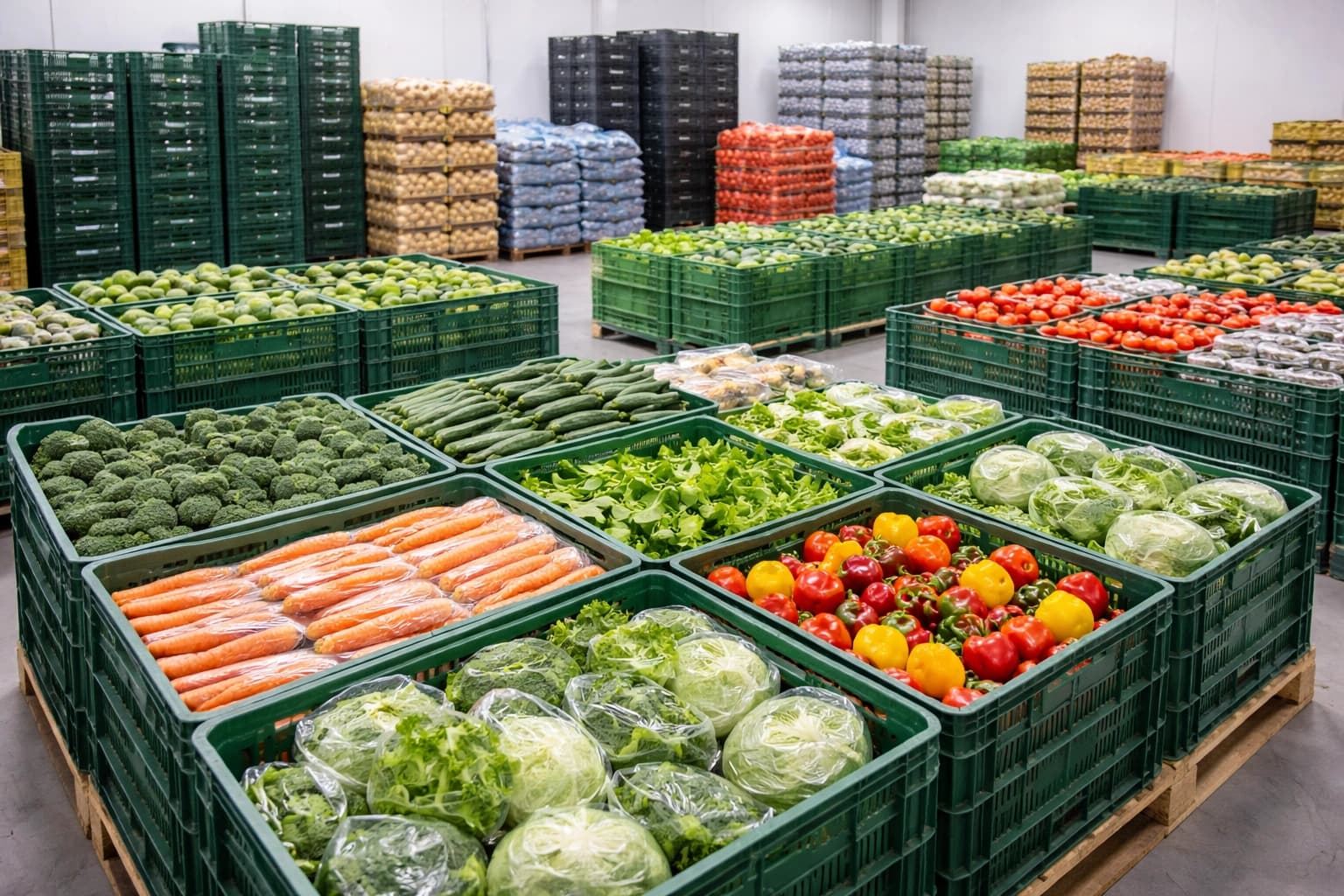
Fresh produce and food service distribution do not operate on the same forgiving timelines that shelf-stable goods allow. A delayed order confirmation in a standard B2B distribution network means a dealer waits an extra day. A delayed order confirmation in fresh produce distribution means a restaurant kitchen runs short during service or a distributor dispatches stock that has already crossed its viable window.
The operational constraints are different in kind, not just in degree. Inventory is perishable and its value decays on a fixed schedule regardless of what the order system shows. Demand is time-bound - a restaurant placing a next-morning order at 10pm needs confirmation before midnight or they will source elsewhere. Fulfillment windows are measured in hours. The margin for infrastructure failure at any point in the chain is narrow.
Most B2B order infrastructure was designed around shelf-stable assumptions: inventory counts are updated periodically, order confirmation can wait until the next processing cycle and fulfillment timelines are measured in days. Fresh chain distribution exposes every gap in that design immediately and at cost. This piece covers what time-sensitive distribution requires from its order and inventory infrastructure and how those requirements reduce spoilage and fulfillment failures in practice.
Why Standard B2B Order Infrastructure Fails the Fresh Chain
The failure modes of standard order infrastructure in fresh chain distribution are specific and recurring. Understanding them is the starting point for understanding what the infrastructure needs to do differently.
Inventory data that is hours behind reality
In shelf-stable distribution, an inventory count that is updated every few hours is operationally acceptable. Stock levels move slowly enough that a periodic sync between the warehouse system and the order platform introduces minimal risk. In fresh produce distribution, an inventory count that is four hours old may reflect stock that has since been allocated to other orders, partially dispatched or moved to the spoilage write-off queue.
When a buyer places an order against stale inventory data, the system confirms availability that no longer exists. The gap surfaces at fulfillment - when the picker goes to the shelf and finds insufficient stock or stock that is no longer in acceptable condition. The order is either short-fulfilled or cancelled at dispatch. The buyer finds out when they expected a delivery, not when they placed the order.
Order confirmation cycles that do not match buyer timelines
Restaurant and food service buyers place orders within specific windows that align with their kitchen planning cycles. A hotel purchasing manager placing a produce order for the following day's kitchen needs confirmation within the same working period, not the following morning when the operations team processes the overnight queue.
Batch order processing - where all orders placed in a period are reviewed and confirmed in a single cycle - is a standard operational model for shelf-stable B2B distribution. It is operationally incompatible with food service buyers who need real-time or near-real-time confirmation to manage their own supply planning. Buyers who cannot get timely confirmation source from a distributor who can provide it.
No visibility into what triggered a fulfillment failure
When a fresh produce order is short-fulfilled or substituted, the buyer receives a partial delivery or a product they did not order. In a manual distribution environment, the reason is rarely communicated clearly and is almost never documented in a way the distributor can learn from. Was the shortfall because inventory data was inaccurate at order placement? Because the warehouse allocated the same stock to two orders? Because the product failed a quality check at dispatch?
Without structured records at each stage of the order and fulfillment workflow, the distributor cannot identify which part of their operation is generating the failures. Spoilage and fulfillment failures are absorbed as operational noise rather than addressed as infrastructure problems.
Real-Time Inventory Awareness as an Operational Requirement
Real-time inventory awareness in fresh chain distribution is not a feature upgrade on a standard inventory management system. It is a functional requirement without which the order infrastructure cannot serve the channel correctly.
Real-time awareness means that when a buyer places an order, the available quantity shown to them reflects actual available stock at that moment - after allocations already made to other confirmed orders and after any write-offs recorded since the last sync. It also means that when an order is confirmed, the allocated quantity is reserved immediately against the live inventory count so that the same stock cannot be confirmed to a second buyer.
This requires a tight integration between the order capture layer and the inventory management layer. The two cannot operate as separate systems with a periodic sync between them. Every confirmed order must trigger an immediate inventory update. Every write-off or quality rejection recorded in the warehouse must be reflected in the available stock visible to buyers without delay.
Distributors who achieve this integration find that a significant share of their fulfillment failures disappear. The orders that were confirmed against stock that did not exist stop being confirmed. Buyers receive accurate availability information at order placement and adjust their orders accordingly. Short fulfillments driven by inventory data gaps decline to near zero.
Structured Order Workflows for Time-Sensitive Buyers
Food service and fresh produce buyers have ordering patterns that are distinct from standard B2B dealer ordering. Order windows are tight, order frequency is high and the commercial relationship between buyer and distributor depends on consistency and reliability of supply, not just price.
Order cutoff management
Fresh chain distributors typically operate with defined order cutoffs: orders placed before a certain time are fulfilled in the next delivery window, orders placed after that time move to the following window. The order infrastructure must enforce these cutoffs automatically, communicating clearly to buyers when the next available fulfillment window opens and what the cutoff for that window is.
Manual cutoff management - where the operations team monitors incoming orders and contacts buyers who miss the window - does not scale and introduces inconsistency. Buyers who receive different cutoff guidance from different team members lose confidence in the distributor's reliability. Automated cutoff enforcement applied consistently through the order platform removes this inconsistency entirely.
Substitution workflows with buyer confirmation
Fresh produce availability changes daily. A product ordered by a restaurant may be unavailable at the grade requested or may be at a price point that has moved significantly since the buyer last ordered it. The standard practice in unstructured distribution is for the operations team to substitute a similar product or a different grade without buyer confirmation and document it on the delivery note.
A structured substitution workflow operates differently. When a line item cannot be fulfilled as ordered, the system generates a substitution request to the buyer with the available alternative specified. The buyer confirms or declines before dispatch. The delivery reflects the buyer's confirmed order, not a unilateral substitution decision made at the warehouse. Buyers who have visibility and control over substitutions are significantly less likely to dispute deliveries or reduce future order volumes because of fulfillment surprises.
Standing order management for high-frequency accounts
Restaurant and institutional food service accounts order similar products at similar quantities on a regular schedule. A structured order platform that supports standing order templates allows these buyers to place their routine order with a single confirmation action rather than rebuilding the order from scratch each time.
Standing orders reduce ordering friction for the buyer and reduce manual order entry work for the distributor's operations team. They also make demand patterns more visible and predictable, which improves inventory planning and reduces the over-purchasing that contributes to spoilage at the distributor level.
Last-Mile Delivery in Time-Sensitive Distribution
Fresh chain distribution last-mile delivery carries operational requirements that differ from standard B2B fulfillment. Delivery windows are tight. Temperature-sensitive products have a narrow acceptable delivery period. Restaurants and hotel kitchens have specific receiving windows aligned with their kitchen preparation schedules and deliveries outside those windows create operational disruption regardless of product quality.
Rider or delivery agent management in fresh chain distribution requires real-time visibility into delivery progress, not end-of-day delivery confirmation. A distributor whose operations team can see at 7am which deliveries are on track and which are behind schedule can intervene before a missed delivery window becomes a missed delivery. A distributor who discovers at 11am that a 7am delivery did not happen has a relationship problem that real-time visibility would have converted into a manageable operational problem.
Delivery confirmation in fresh chain distribution also requires proof of delivery that is specific enough to be useful. A confirmation that records delivery time, the name of the receiving staff member and any noted discrepancies at receipt provides the reference point for the disputes about short deliveries and product condition that are common in fresh produce supply. A GPS-stamped delivery confirmation attached to the order record is a different operational tool than a driver calling the operations desk to confirm they have finished their route.
Spoilage Reduction as an Infrastructure Outcome
Spoilage in fresh produce distribution has multiple causes: demand forecasting errors, purchasing above actual order volume and quality failures in storage or transit. It also has a cause that is directly attributable to order infrastructure: confirmed orders that fail at fulfillment because inventory data was inaccurate, leaving stock that was expected to ship sitting in the warehouse past its viable window.
When real-time inventory awareness prevents orders from being confirmed against stock that does not exist, the operational effect is not only a reduction in fulfillment failures. It is also a more accurate picture of what is actually being ordered versus what is available, which feeds directly into purchasing decisions.
A distributor who can see, in real time, which SKUs have confirmed order cover and which are sitting without orders as their viability window closes can make active decisions: discount the unallocated stock to drive orders before the write-off threshold, offer substitutions proactively to buyers who have standing orders for similar products or adjust purchasing quantities for the next cycle based on what the order data shows.
These decisions require data that is current, structured and accessible without manual assembly. They cannot be made reliably from a spreadsheet updated once a day. The infrastructure that supports real-time order management in fresh chain distribution is the same infrastructure that makes active spoilage reduction possible. One does not exist without the other.
Integration Requirements Specific to Fresh Chain Operations
Fresh chain distributors typically operate with a combination of systems: a warehouse management or cold storage platform, an accounting system for invoicing and payment tracking and, in more structured operations, a procurement system linked to supplier relationships. The order infrastructure sits at the centre of this stack and its value depends on how tightly it integrates with each layer.
Warehouse and cold storage integration. The available inventory visible to buyers must reflect what the warehouse system holds as available stock - net of allocations, quality holds and items in the inbound receiving queue that have not yet cleared quality inspection. Integration at this level requires that the warehouse system and the order platform share inventory state in real time or through a sync frequency that is appropriate for the perishability window of the products being managed.
Accounting and invoicing integration. Confirmed and delivered orders must flow into the accounting system without manual transfer. In high-frequency food service distribution, the volume of daily transactions makes manual invoicing transfer an operational bottleneck and a source of reconciliation errors. Integration ensures that every confirmed delivery produces a corresponding invoice record automatically, with the correct pricing and any substitutions or short-fulfillments reflected accurately.
Buyer-facing account visibility. Restaurant and food service buyers need to see their order history, outstanding invoices and credit position without contacting the distributor's accounts team. Account visibility in the buyer portal reduces inbound queries and accelerates payment cycles by giving buyers direct access to the information they need to approve and process invoices.
Summary
Fresh produce and food service distribution operate under constraints that expose the gaps in standard B2B order infrastructure quickly and at measurable cost. Stale inventory data produces fulfillment failures. Slow order confirmation loses buyers to distributors who can respond within their planning window. Unstructured delivery confirmation leaves disputes unresolvable.
The infrastructure requirements for time-sensitive distribution are specific: real-time inventory awareness with immediate allocation on order confirmation, structured order workflows that match buyer planning cycles, active substitution management with buyer confirmation and last-mile delivery tracking that provides operational visibility before missed windows become missed deliveries.
Distributors who build this infrastructure do not just reduce spoilage and fulfillment failures. They build the operational reliability that food service buyers require to commit to a primary supplier relationship. In a channel where reliability is the primary commercial differentiator, the infrastructure is the competitive position.