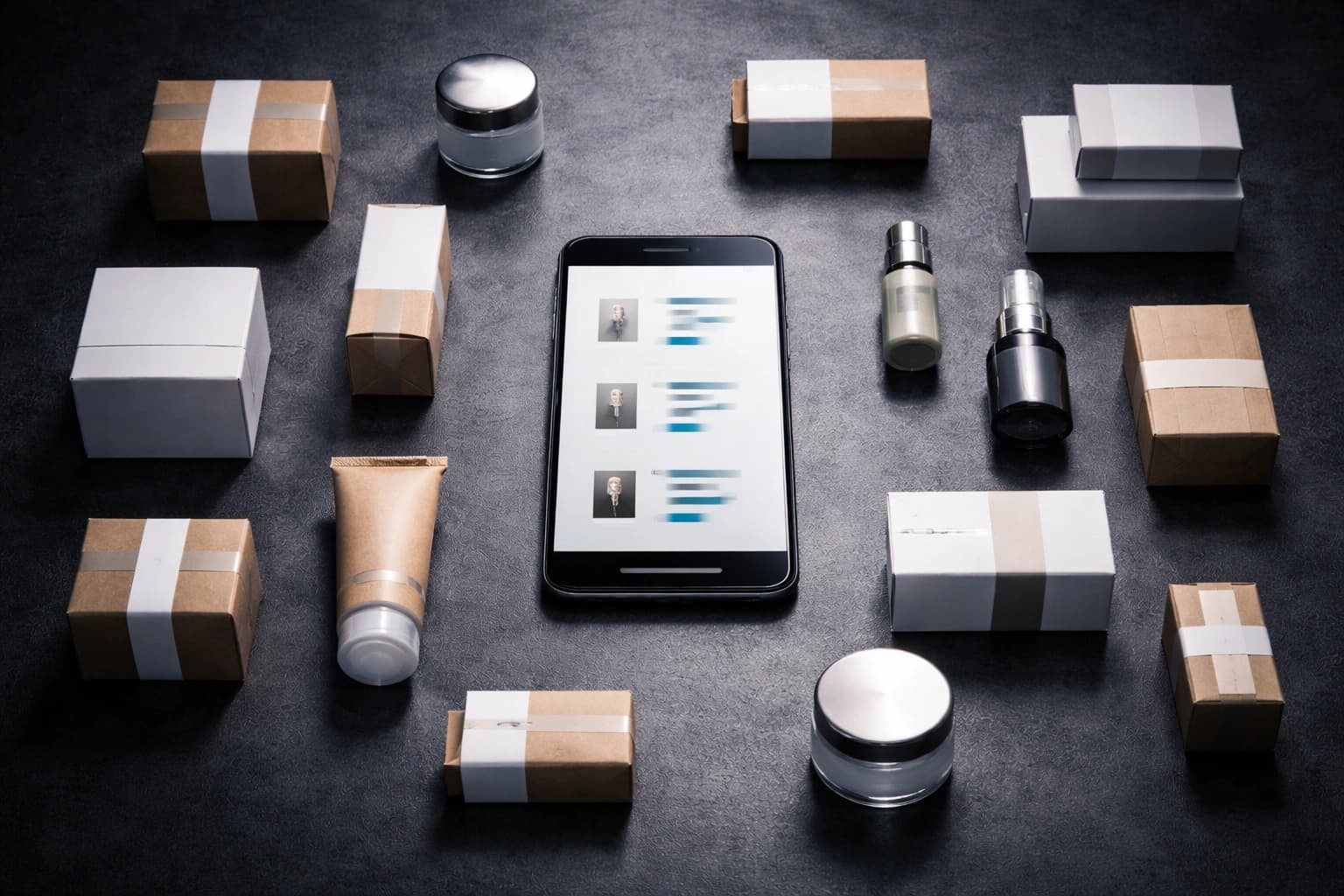
Mobile is where most dealer ordering happens in practice. A sales rep visits a dealer. The dealer's order desk manager is on their phone. The product catalog, if it exists at all in structured form, is a PDF sent via WhatsApp. The order is placed the same way.
Manufacturers who want to move dealer ordering into a structured channel need to meet dealers where they operate, on mobile, in a format that is faster and simpler than the informal alternative. A branded dealer ordering app is how that happens.
The challenge most manufacturers face is not understanding why a dealer app matters. It is understanding how to deploy one without committing to a custom software development project that costs more than the problem it solves and takes longer to build than the network can wait.
This guide covers what a dealer ordering app needs to do, what branded deployment actually means in practice and how manufacturers can launch one across their distribution network without building from scratch.
What a Dealer Ordering App Needs to Do
A dealer ordering app is not a mobile version of a consumer shopping app. It is a mobile interface to the manufacturer's dealer commerce infrastructure and it needs to reflect the operational requirements of B2B distribution, not the UX conventions of retail e-commerce.
Account-specific catalog and pricing
When a dealer logs into the app, they see the products available to their account at the prices applicable to their tier. They do not see a generic catalog with a single public price. The app is an authenticated, account-aware interface, not a browse experience.
Order placement with real-time validation
Order placement must be fast, fewer steps than composing a WhatsApp message ideally. The app validates orders at submission: product availability, minimum quantities and credit limit. Problems are flagged immediately with specific guidance, not after the order has entered a manual processing queue.
Order tracking and delivery visibility
After placing an order, the dealer can track it through the app: processing, dispatched, out for delivery and delivered. This eliminates the status calls that consume operations team time. Dealers who have delivery visibility in their pocket do not need to call anyone to find out where their order is.
Account and credit visibility
The app should give dealers visibility into their credit limit, outstanding balance and order history without requiring a call to the manufacturer's finance team. Account transparency reduces friction and reduces inbound queries.
Performance on mid-range hardware and variable connectivity
In most distribution markets, including much of India and other high-growth manufacturing regions, dealers operate on mid-range Android devices in areas with variable network connectivity. An app that requires high-end hardware or fast connectivity to function will not achieve the adoption rates that justify its deployment. Performance on constrained environments is a functional requirement, not an optimization.
What Branded Deployment Actually Means
A branded dealer ordering app carries the manufacturer's identity, including name, logo and color palette, not the software vendor's. When a dealer downloads and opens the app, they are interacting with the manufacturer's brand. This matters for three reasons.
Distribution relationship integrity. The manufacturer's brand is the commercial relationship the dealer has. An app that presents a third-party vendor's identity inserts an intermediary into that relationship. Over time, this can shift dealer perception of who they are doing business with.
Adoption psychology. Dealers are more likely to use an app that feels like it belongs to their supplier than one that feels like a generic third-party tool. Brand familiarity reduces the friction associated with adopting a new ordering channel.
Network differentiation. A manufacturer who provides their dealer network with a branded ordering app signals a level of operational investment and seriousness that differentiates them from competitors who still manage ordering through WhatsApp. This matters in competitive distribution markets.
In practice, branded deployment means the app is published in the Google Play Store and Apple App Store under the manufacturer's name and branding. Dealers search for the manufacturer's app, not a generic vendor app, and download it. The login screen, the catalog interface and every screen of the ordering workflow carries the manufacturer's visual identity.
Building vs. Deploying: Why Custom Development Is the Wrong Starting Point
The first instinct many manufacturers have when they decide to build a dealer ordering app is to commission custom software development. A development agency builds the app to specification. It is exactly what the manufacturer wants. And it takes six to twelve months to deliver, costs significantly more than projected and requires ongoing maintenance investment that was not anticipated.
By the time the custom app is ready, the distribution network has been waiting for over a year, continuing to place orders through WhatsApp while the project runs. When it launches, any bugs or capability gaps require another development cycle to fix.
Custom development makes sense for manufacturers with genuinely unique operational requirements that no existing platform can meet. For most manufacturers deploying dealer ordering apps, the requirements are well-defined and well-served by existing dealer commerce infrastructure platforms that offer branded app deployment as a core capability.
The relevant question is not how to build a dealer ordering app. It is how to deploy one: quickly, correctly and with the operational integrations in place that make it genuinely useful on day one.
How Branded App Deployment Works Through a Platform
Dealer commerce infrastructure platforms that include branded app deployment operate on a white-label model. The core app architecture, including ordering engine, pricing layer, account management and delivery tracking, is built and maintained by the platform. The manufacturer's branding, catalog, pricing configuration and dealer accounts are layered on top.
The deployment process involves:
- Brand configuration: the manufacturer's logo, color palette and app name are applied to the app interface. The app store listing is set up under the manufacturer's developer account.
- Catalog and pricing setup: products, inventory data, price lists and dealer tier assignments are configured in the platform. The app draws from this configuration at runtime.
- Dealer account provisioning: each dealer account is created in the platform with their assigned pricing tier, credit limit and user credentials. Dealers receive login details and download instructions.
- Integration configuration: connections to the manufacturer's inventory system, ERP and accounting platform are established so order data flows correctly in both directions.
- App store submission: the branded app is submitted to the Google Play Store and Apple App Store. Review and approval timelines are typically three to seven days.
This process, from configuration start to app store availability, is measurable in weeks, not months. The platform handles the engineering. The manufacturer handles the commercial configuration and dealer onboarding.
Dealer Onboarding: The Adoption Factor
An app that is available in the app store but not used by dealers has delivered no operational value. Dealer onboarding, the process of getting dealers to download, activate and regularly use the app, is the adoption layer that determines whether the deployment succeeds.
The principles that produce strong adoption are consistent:
Make the first order easier than WhatsApp. The first experience a dealer has with the app must be faster and simpler than their current ordering method. If the first order takes longer than composing a WhatsApp message, the dealer will not place a second order through the app. First-use experience is the adoption gateway.
Onboard in phases, not all at once. Start with ten to fifteen dealers who are operationally engaged and have positive relationships with the manufacturer. Validate that the app works correctly for their accounts: pricing, catalog and credit limits, before expanding to the full network. Problems discovered in a pilot of fifteen dealers are manageable. The same problems discovered after onboarding two hundred dealers simultaneously are not.
Communicate the dealer benefit explicitly. Dealers need a reason to change their ordering behavior. The reason must be tangible: immediate order confirmation, real-time delivery tracking and account visibility without calling. Communicate these benefits directly. Do not assume dealers will discover them on their own.
Continue accepting informal orders during transition. Cutting off WhatsApp ordering before portal adoption is established creates resistance. The transition period, during which both channels are active, is normal and expected. Plan for it. Manage informal orders through the structured system during this period.
Summary
A branded dealer ordering app is one of the most effective ways to move a distribution network from informal, fragmented ordering toward structured, auditable commerce. It meets dealers on the device they already use, in a format they are familiar with, carrying the manufacturer's brand and it provides the validation, pricing governance and fulfillment visibility that WhatsApp cannot.
The path to deployment does not require custom development. It requires selecting a dealer commerce infrastructure platform that includes branded app deployment as a core capability, configuring it correctly and approaching dealer onboarding as an operational project with a phased rollout and explicit adoption metrics.
Manufacturers who do this consistently deploy in weeks, not months, and achieve adoption rates that reflect the operational value the app delivers to dealers, not just the commercial intent of the manufacturer who deployed it.